6:45pm, Umoja Estate
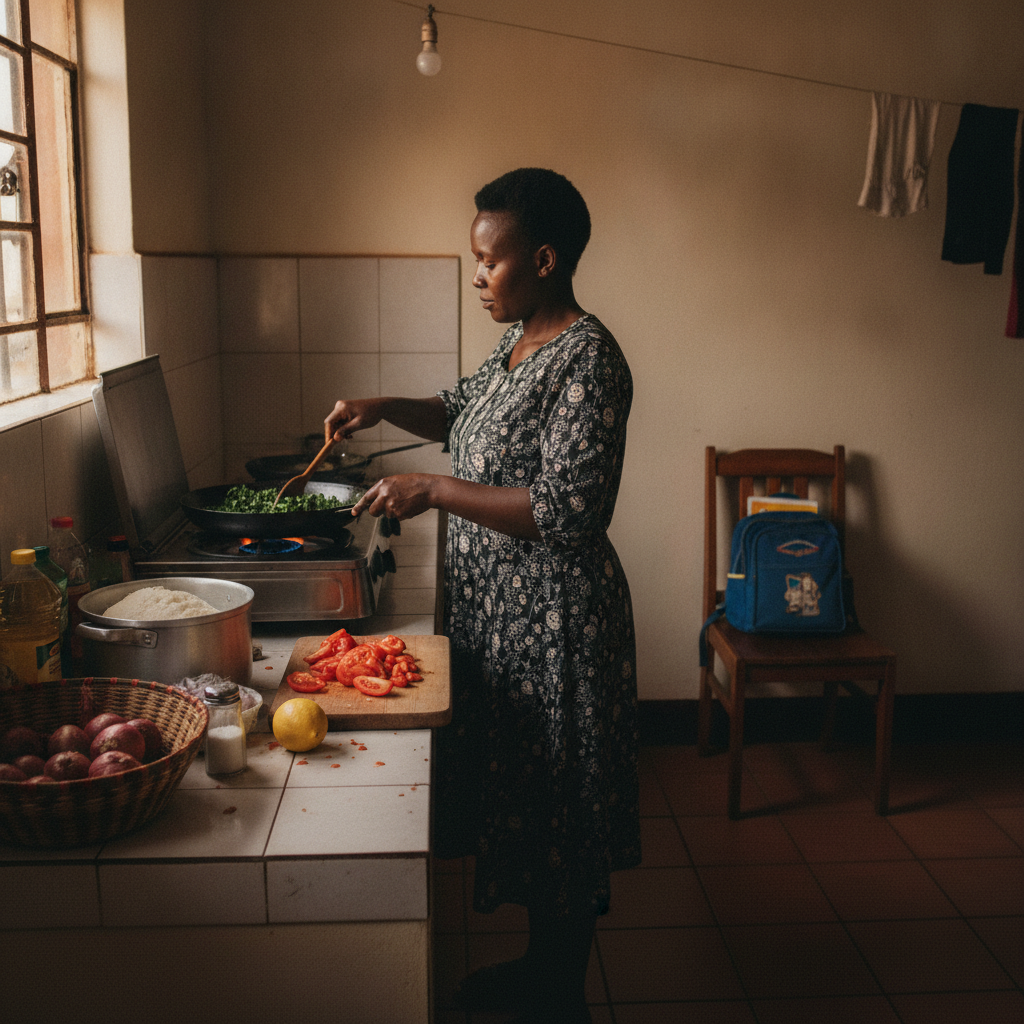
Njeri stands at the counter pulling sukuma wiki off the stems. The beans have been on since four. Rice is almost done. Her son needs to eat before homework; her husband will not be back until eight but will want his food hot.
She spent KES 180 at the mama mboga on the walk home. Tomatoes, onions, sukuma wiki, a lemon. She knows this meal by heart -- she has cooked it, or something close to it, four nights this week. It is cheap, it is fast, and everyone eats it without complaint.
What she does not know -- what nobody has told her -- is that the cabbage she substitutes for sukuma wiki twice a week delivers near-zero vitamin A, while sukuma wiki at the same price would add 250-420 micrograms. She does not know that the beans she batch-cooks on Sunday lose virtually all their vitamin C by Wednesday's third reheat -- adding a fresh tomato slice at serving costs KES 5 and restores what reheating destroyed. She does not know that the avocado she buys for her husband's Sunday breakfast, sliced alongside the greens, would unlock the full vitamin A her children are missing -- the fat is the key, and half an avocado costs KES 10 in season. The meal she considers boring is, with these adjustments, genuinely excellent.
Njeri is not careless. She is one of the most resourceful meal planners in Nairobi. She feeds five people three times a day on a budget that must cover rent, school fees, and transport first. What she lacks is not effort or love. It is a single piece of information: what her family's bodies actually absorb from what she puts on the table.
“You just cook what you know. You don't really think about whether the body is getting what it needs -- you think about whether everyone is full.”
— A mother in Nairobi
Sound familiar?
You have cooked the same three dinners on rotation this week, not because you lack imagination but because they work. You have substituted cabbage for sukuma wiki because it was cheaper that day, not knowing you traded away the vitamin A your children needed. You have reheated Sunday's beans on Wednesday and not thought about what survived the third warming. You have Googled "is ugali healthy" and gotten ten contradictory answers written by people who have never seen a jiko.
You are not doing anything wrong. You are missing one thing: a way to see what your meals are already doing right, and what one small change would make them better.
Now picture Wednesday
Njeri stands at the same counter. Same budget. But before she started cooking, she opened Timiya and logged what she was planning: ugali, cabbage, beans.
The score came back: 42. The app showed her two things: the cabbage is delivering almost no vitamin A -- swap it for sukuma wiki at the same price. And the beans from Sunday's batch have lost all their vitamin C after three days of reheating -- add a fresh tomato when serving.
Thursday she logged the adjusted meal: ugali, sukuma wiki fried in a tablespoon of oil, reheated beans with sliced tomato. The score: 76. Same grocery spend. Same family at the same table. The difference is 5x more vitamin A and double the iron her children absorbed.