7:15pm, South B
Fatma sits on the edge of the sofa with a cup of chai, waiting for the nausea to pass. The iron-folate tablets the nurse gave her are on the kitchen counter. She took one this morning and spent an hour feeling sick. She has been skipping them more than she admits — three times this week.
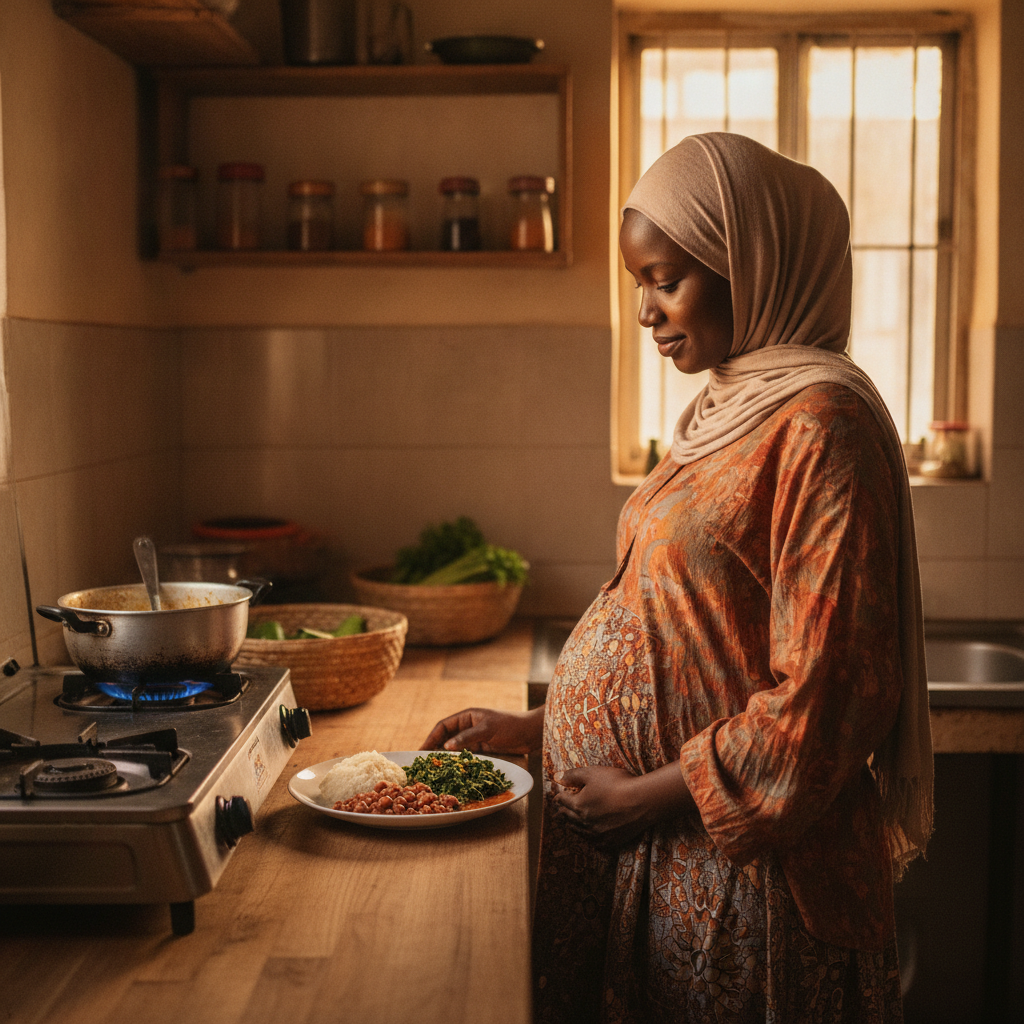
Dinner is almost ready. Her husband started the beans before she got home from work. She will make ugali and warm up the sukuma wiki from yesterday. The same meal she has cooked a hundred times. The same meal her mother cooked when she was pregnant with her.
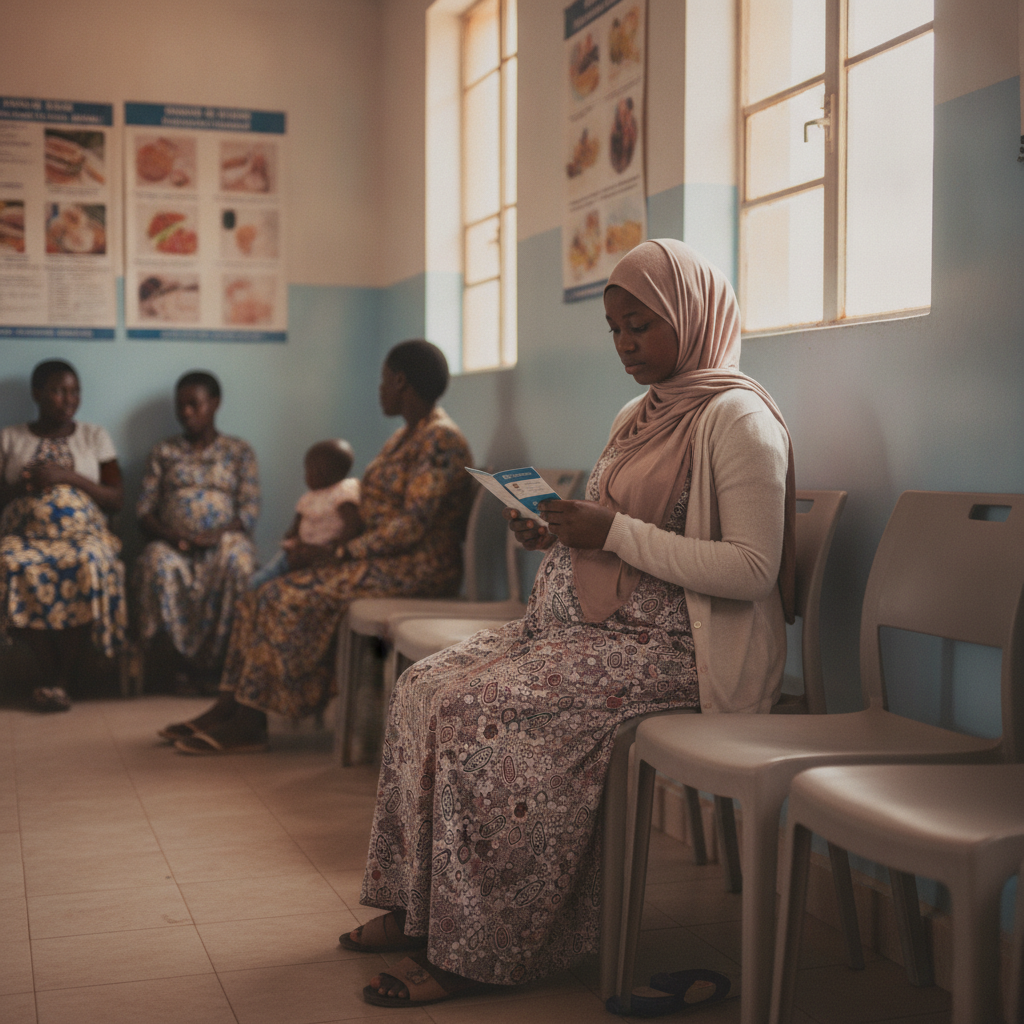
At her last antenatal visit, the nurse checked her hemoglobin: 10.2 g/dL. Below the 11 g/dL threshold. "You are mildly anemic," the nurse said. "Take your supplements and eat iron-rich foods." Fatma nodded. She went home and Googled "iron-rich Kenyan food." She found lists that said spinach, liver, red meat. She cannot afford liver more than once a month. She already eats beans and sukuma wiki every night. She is doing what she knows to do.
What nobody has told Fatma is that her iron needs during pregnancy have nearly doubled to 27 mg per day. She has been eating beef liver when she can afford it because her mother told her to -- but too much preformed vitamin A from liver can cause birth defects. Once a week is the safe limit; the rest should come from orange-fleshed sweet potatoes, where the beta-carotene self-regulates. Nobody has told her that the folate her baby needs most right now drops 40-70% when she boils her vegetables and discards the water -- steaming would retain 60-85%. Nobody has told her that her grandmother's fermented uji, the one she stopped making because it takes two days, destroys 60-80% of the phytates that block iron and zinc absorption. Her body will absorb maybe 1.2 mg of the 8 mg of iron on her plate tonight. She needs 15 mg absorbed. She is not failing at nutrition. She is being failed by a gap between what is on her plate and what reaches her blood -- and her baby's.
“We are told to eat balanced meals, but nobody tells us what balanced means when you cook ugali and sukuma every night.”
— A pregnant woman in Nairobi
Sound familiar?
You have taken the iron tablets and felt worse, not better. You have eaten liver because your mother told you to, not knowing there is a safe limit during pregnancy. You have boiled your managu and discarded the water, not knowing the folate your baby needs most went down the drain. You have wondered whether your grandmother's fermented uji -- the one that takes two days to prepare -- was actually healthier than the instant version. You have searched for "what to eat during pregnancy Kenya" and found advice written for women with different kitchens.
You are not doing anything wrong. You are missing one thing: a way to see what your body -- and your baby's body -- is actually receiving from the meals you already cook.
Same kitchen, different outcome
Fatma opens Timiya after dinner. She logs what she ate: ugali, beans, sukuma wiki, boiled managu. The app knows she is in her second trimester -- her nutrient targets have been adjusted automatically. The score comes back: 34. Iron absorbed: 1.2 mg out of a 15 mg target. Folate absorbed: 42% of target. The app highlights three things: the beans were not soaked, the managu was boiled with the water discarded (losing 60-80% of its folate), and the greens had no oil (near-zero vitamin A absorbed).
Over the next week, she tries three changes. She soaks the beans overnight -- her grandmother used to do this, she just stopped. She steams the managu instead of boiling, retaining the folate her baby needs most. She adds a tablespoon of oil to the sukuma wiki. She logs the adjusted meals. Iron absorbed: 3.4 mg. Folate: 71% of target. The completeness ring moves from red to amber.
The app suggests two more changes: swap one dinner's beans for omena twice a week -- the heme iron in fish is absorbed at 5-10 times the rate of plant iron and it pulls up absorption from the beans alongside it. And replace the boiled sweet potato with orange-fleshed varieties mashed with a teaspoon of butter -- 39% of daily vitamin A needs instead of 7%. Her weekly average climbs to 8.6 mg absorbed iron per day. At her next antenatal visit, her hemoglobin has risen to 10.8 g/dL. The nurse asks what changed. Fatma says: "Same kitchen. I just learned how to cook what I already buy."