Kevin hasn't been to a doctor in four years
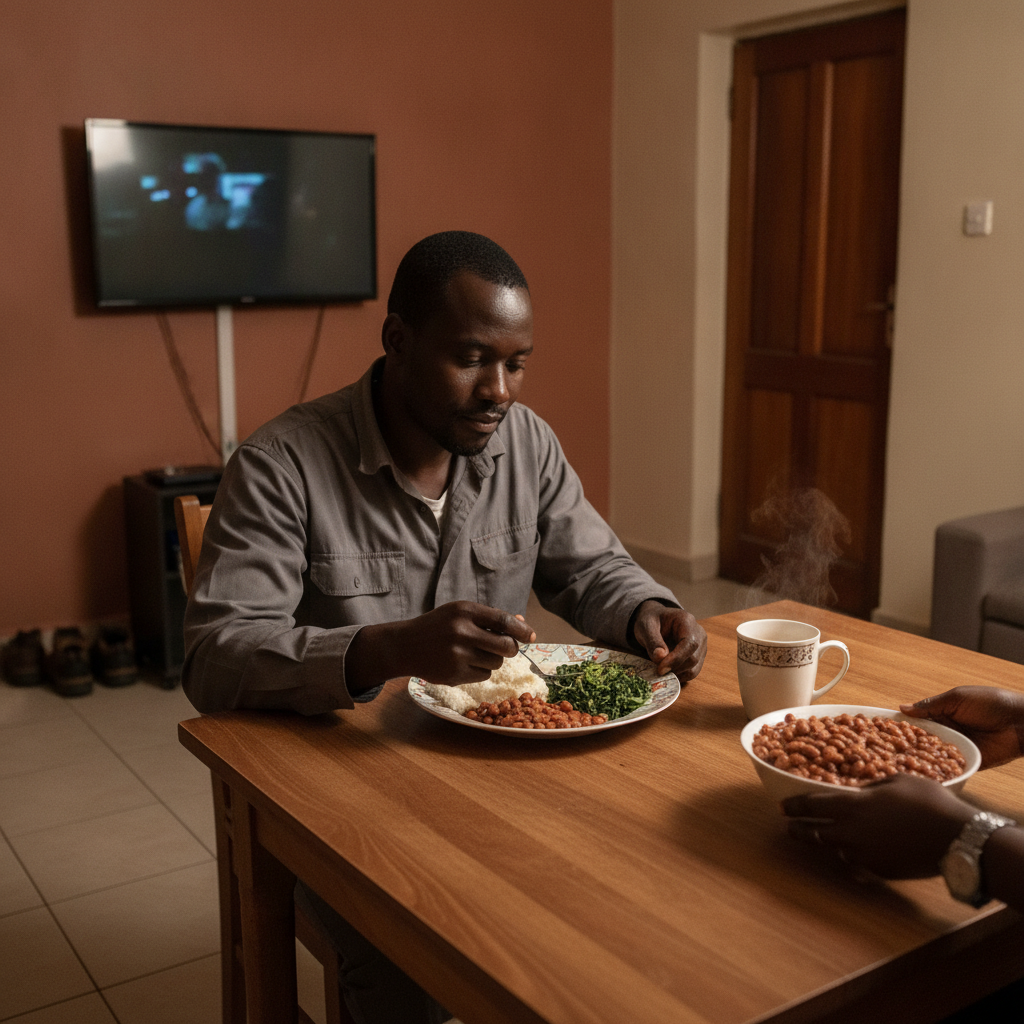
Kevin gets home at seven-thirty. He drops his phone on the table, washes his hands, and sits down to eat whatever Njeri has put on the table. Tonight it is ugali, sukuma wiki, and beans. He eats quickly, drinks his chai, and moves to the couch. He does not ask what is in the food. He does not think about whether it is nutritious. He thinks about whether he is full.
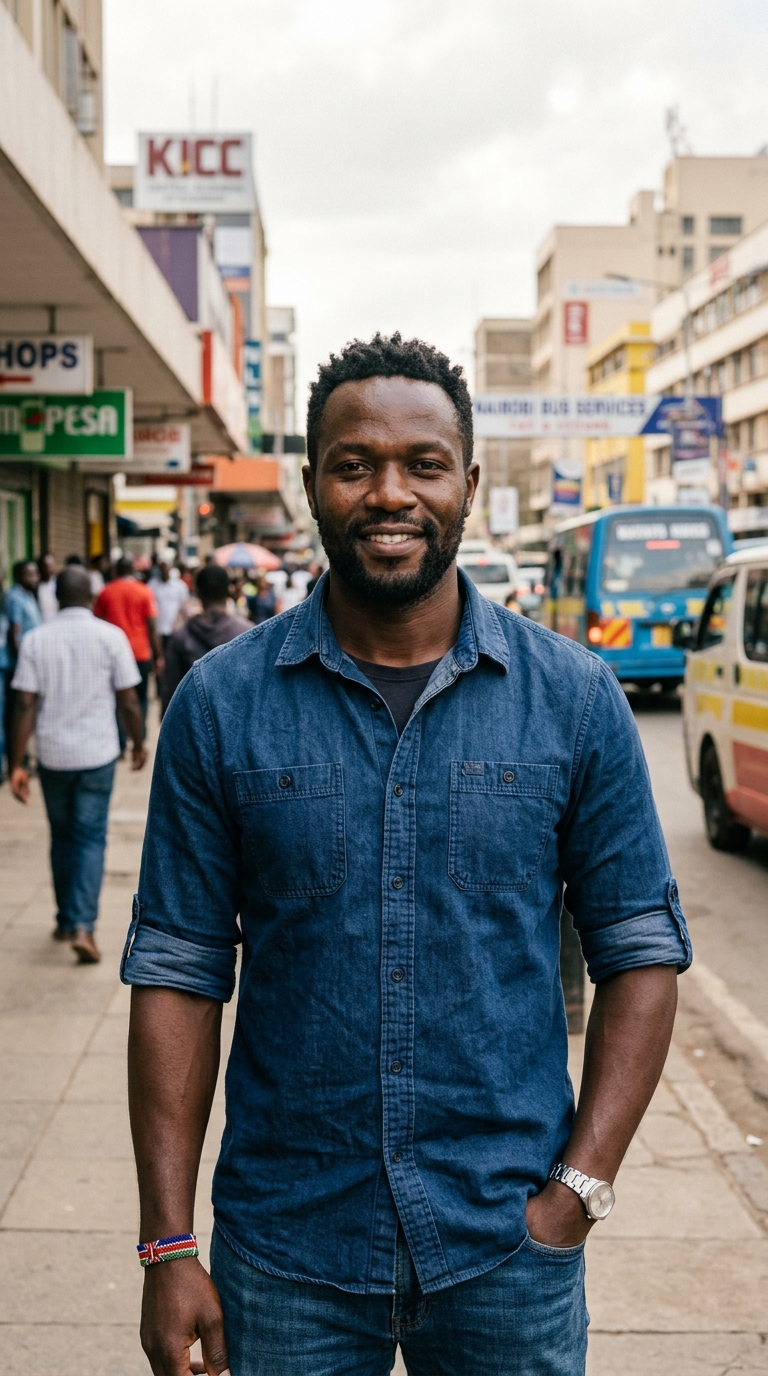
At work in Kasarani, Kevin eats what is available. Chips and ketchup from the street vendor outside the yard. Chapati and beans from the mama fua who sets up near the bus stage. A soda or two. Sometimes roasted maize if he is on the road. 79% of urban Kenyans consume sugar-sweetened beverages regularly. Kevin is one of them.
He has not had his blood pressure checked since his last child was born. He does not know that 59% of Kenyan males have pre-hypertension. He does not know his own numbers. When he gets a headache, he takes a painkiller. When the headache persists, he takes two. He has chewed herbal roots his uncle recommended. He has never called a doctor about it. His barriers are not complicated: it costs money he would rather spend on his family, the wait is long, and going to a hospital feels like admitting something is wrong.
Kevin will never download a nutrition app. He will never search for "bioavailability." He will never track a meal. But Kevin eats dinner at home five nights a week. That dinner is cooked by Njeri. And Njeri is the distribution channel to Kevin's body.
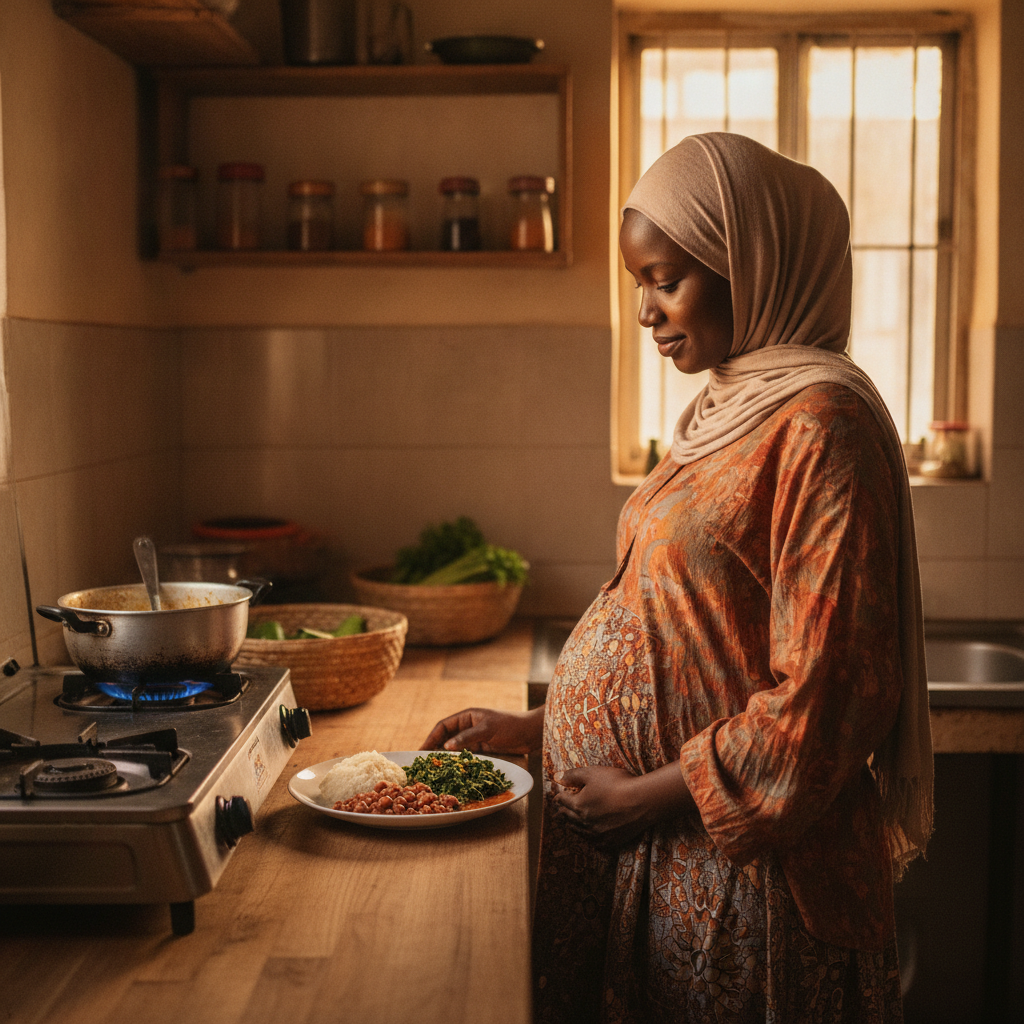
When Njeri swaps cabbage for sukuma wiki, Kevin gets 250-420 micrograms of vitamin A he was missing. When she soaks the beans overnight, the phytates that block zinc and iron break down -- for Kevin's plate as much as for hers. When she adds a fresh tomato to the reheated beans on Wednesday, the vitamin C doubles the iron Kevin absorbs. The household is the intervention. The kitchen is the clinic Kevin will never walk into.
The nyama choma Kevin enjoys on weekends is genuinely rich in heme iron, zinc, and B12. What he does not know is that the lemon he squeezes on it is not just for flavor -- it reduces cancer-causing compounds from charcoal grilling by up to 90%. And the two to four beers he drinks with it impair his absorption of folate, B12, and thiamine. His weekend feast feeds him less than the same plate without alcohol.
“For a man to go to the hospital, then that would be his last option.”
— A man in a Nairobi focus group
You know this man
He is your husband who says he is fine when he looks exhausted. He is your brother who self-medicates with painkillers from the duka. He is your colleague who has not been to a doctor since his last child was born. He will persevere at home rather than admit something is wrong. He will pay for his wife's hospital visit and skip his own.
He will never seek help for himself. But he eats dinner at home. That dinner is the intervention he will never refuse.
Reach Kevin through the kitchen
Njeri uses Timiya. She logs dinner: ugali, cabbage, reheated beans. The app shows her that the cabbage delivers near-zero vitamin A -- swap it for sukuma wiki at the same price and fry it in a tablespoon of oil. It shows her that the beans have lost their vitamin C after three days of reheating -- add a fresh tomato when serving.
Kevin does not know any of this happened. He sits at the same table, eats what he has always eaten. The ugali tastes the same. The greens look the same. But the vitamin A his body absorbs has jumped 5x, and the iron from the beans has doubled -- because a fresh tomato replaced the vitamin C that reheating destroyed.
The product reaches Kevin without ever asking him to admit he has a health problem. Without asking him to download an app, visit a doctor, or change a single habit. This is by design.