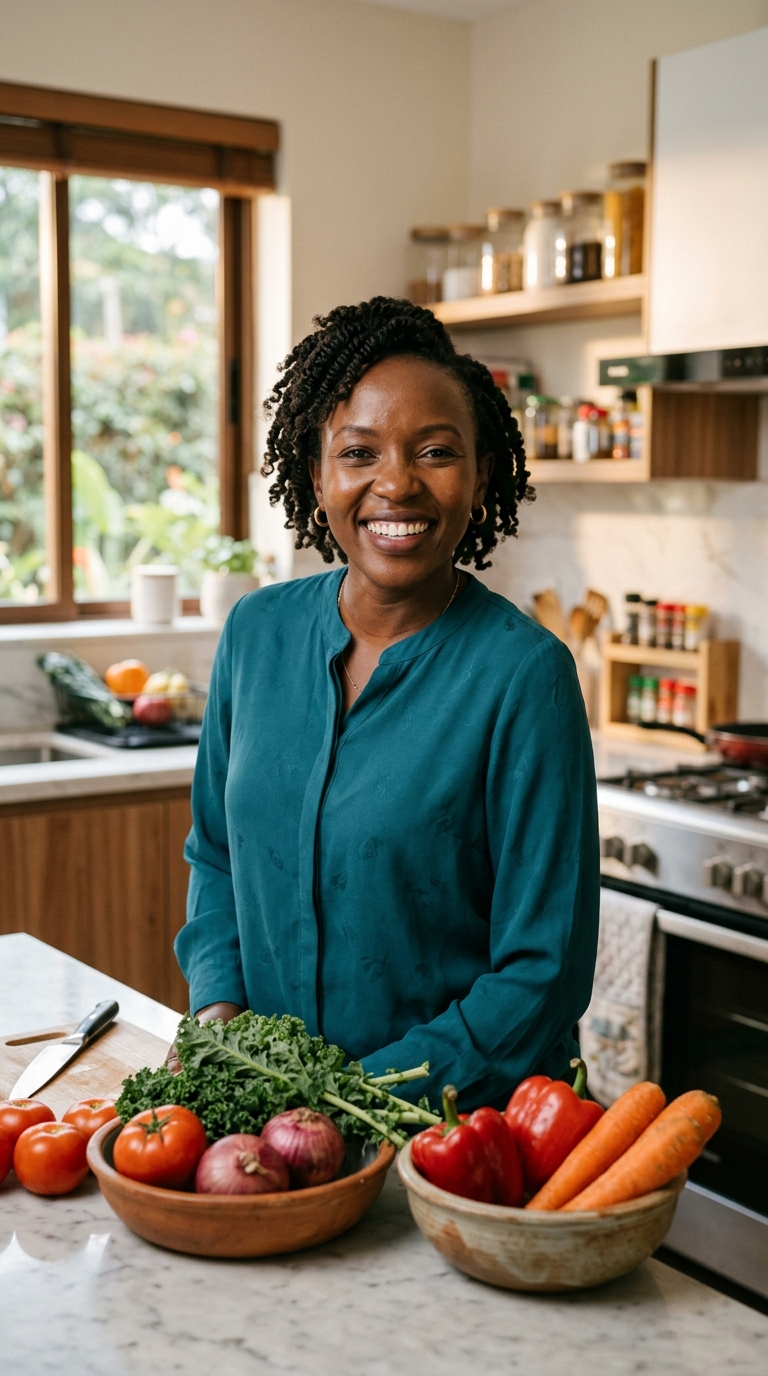

Tuesday evening, Kilimani
Amina drops her gym bag by the door and kicks off her trainers. Spin class ran forty-five minutes. She is still catching her breath as she opens the fridge -- leftover rice, two eggs, half an avocado. She scrambles the eggs, slices the avocado, and eats standing at the kitchen counter of her Kilimani one-bedroom, scrolling Instagram with her free hand.
Three of the first ten posts are wellness content. A fitness influencer in Lagos says intermittent fasting changed her life. A nutritionist in LA lists ten foods that "destroy your gut." A Nairobi food blogger posts a smoothie bowl with acai and chia seeds. Amina double-taps, keeps scrolling. She has tried intermittent fasting. She briefly went low-carb. She once ordered a meal prep service that lasted three weeks. None of it stuck -- not because she lacked discipline, but because none of it was built for the food she actually eats.
Her father was diagnosed with type 2 diabetes eight months ago. She flew home for a weekend, watched him prick his finger, watched her mother rearrange the kitchen around his new medication schedule. She came back to Nairobi and booked a blood panel. Her ferritin came back low. The doctor said "eat more iron." She Googled "iron-rich Kenyan food" and found nothing useful. She takes an iron supplement now -- with her morning tea, because that is when she remembers.
What Amina does not know is that the spinach in her morning smoothie has 100mg of calcium per serving, but her body absorbs only 5mg -- oxalates lock the rest away. Sukuma wiki would deliver 10x more usable calcium from the same serving size. She does not know that her iron supplement, taken with her morning coffee, loses 40-60% of its effectiveness before it reaches her bloodstream. She does not know that the turmeric latte she orders twice a week needs the coconut milk version to work -- curcumin without fat passes through unabsorbed. She is not uninformed. She is misinformed -- drowning in global wellness content that does not account for the bioavailability of what she actually swallows.
She has tried MyFitnessPal. It does not know githeri. She searched for ugali once and got "cornmeal porridge, 1 cup." She closed the app. She has not opened it since.
“She has tried MyFitnessPal. It doesn't know githeri.”
Sound familiar?
You have put spinach in your smoothie because the internet said it was rich in calcium, not knowing your body absorbs barely 5% of it. You take an iron supplement with your morning coffee because that is when you remember -- not knowing the coffee cuts its effectiveness in half. You have wondered, more than once, whether your grandmother's fermented uji was healthier than your acai bowl. You eat out three times a week at cafes in Westlands and you have no idea what any of it does inside your body.
You are not doing anything wrong. You are missing one thing: a nutrition tool that knows your food and shows you what your body actually absorbs.
Now open the app
Amina logs her breakfast: spinach smoothie, toast, iron supplement, morning coffee. The score comes back: 38. The app highlights three things -- the coffee taken with her supplement blocks 40-60% of the iron. The spinach she chose for calcium is the worst source on her shopping list (oxalates trap 95% of it). And her supplement exceeds 500mg calcium, so half of it passes through unabsorbed.
She tries three changes the next week. Takes her iron supplement mid-morning with an orange slice instead of coffee. Swaps spinach for sukuma wiki in the smoothie. Splits her calcium supplement across two meals. She logs the same week. The score: 64. Nothing new was purchased. The gap between 38 and 64 was which foods she paired and when.
She screenshots the score and sends it to her WhatsApp group. Three friends download the app by lunch.